The one big mistake I’d be wary of
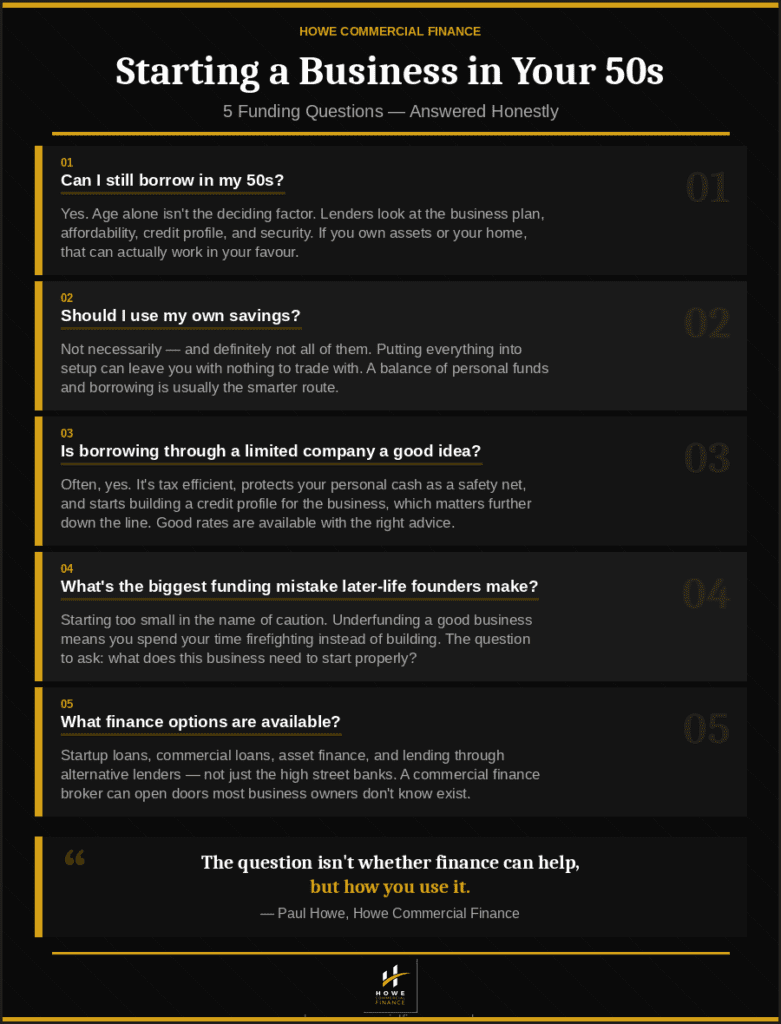
One thing I’d say is this: a lot of later-life founders start small because they want to be sensible. Fair enough. But sometimes that turns into thinking too small as well.
They assume the business will stay small. So they hold back on investment. They make do. They delay decisions. They try to do everything on the cheap.
Sometimes that works. Sometimes it just slows a good business down.
I’ve seen too many businesses struggle with this exact issue. Not because the idea was poor, and not because the owner lacked experience, but because they didn’t give the business enough room to get going properly.
That might mean not taking on the right premises. Not buying the equipment that would save time. Not investing in stock, marketing, fit-out or working capital. In other words, not giving the business the platform it needs.
It’s about giving your business breathing space, not piling on pressure.
What funding options are there?
The right answer depends on the person, the business, and what they’re trying to build. But broadly, most new business owners tend to look at a mix of self-funding, loans, or outside investment. Government guidance also points people towards business advice and support services when they’re setting up.
For some, using part of their own savings makes sense. It shows commitment, and it may reduce how much needs to be borrowed.
For others, borrowing is the more sensible move, especially if keeping some money back gives them a safety net. Just because you can put all your own cash into a business doesn’t always mean you should.
And for some businesses, there may be start-up lending available. The UK Start Up Loans scheme says applicants must be 18 or over, UK-based, and either starting a business or trading for up to 36 months. The scheme currently states that loans generally range from £500 to £25,000, repayable over one to five years at a fixed 6% annual interest rate, subject to status and eligibility. It also offers access to mentoring.
That said, not every business will fit that route, and not every borrower will want it. Some people will be better suited to other forms of finance depending on the sector, the amount needed, the assets involved, and the wider business plan. The British Business Bank’s finance guidance points to a wider range of routes for smaller businesses. This is where working with a commercial finance broker is the best solution. It provides streamlined access to alternative finance options and more comprehensive advice, especially one that has expertise, experience and passion for working with those starting a business later in life.
Should you use your own money?
This is often the biggest emotional question.
People in later life may have savings. They may have built up assets. They may even feel they ought to fund the whole thing themselves because they’ve worked hard to get where they are.
Let’s be honest, that isn’t always the best answer.
There’s a difference between backing yourself and leaving yourself overexposed.
I’ve seen people put everything they have into the fit-out, the premises, the stock, and then have nothing left to actually trade with. The business opens its doors, and immediately there’s no room to breathe. No buffer for a slow first month. No flexibility to make a decision when an opportunity comes up. That’s not caution. That’s a problem.
If putting too much of your own money in means you’re constantly tight for cash, worrying about every invoice, or unable to invest when the business needs it, then that can create more stress than it solves.
The better route is usually balance.
Put some money in, yes. But keep enough back so you’re not building the business with your last available pound. Finance, used properly, can help spread the cost of getting started and protect your own position at the same time.
And here’s a point that surprises some people: borrowing through a limited company is often more sensible than it looks. It’s tax efficient. It preserves your own cash as a safety net. With the right commercial finance help, you can access good rates. And it starts to build a credit profile for the business, which matters further down the line.
That’s especially important if your goal isn’t just to start a business, but to build one that gives you a decent income, flexibility, and a bit of enjoyment in this stage of life.
Don’t confuse caution with underfunding
Being cautious is sensible. Underfunding the business is a different matter.
A business that starts with too little working room can quickly become hard work for all the wrong reasons. You spend your time firefighting instead of building. You hesitate over every decision. You miss opportunities because you’re trying not to spend.
That’s why I always come back to the same point: what does this business need to start properly?
Not extravagantly. Properly.
Does it need equipment?Does it need stock?Does it need a vehicle?Does it need premises or a fit-out?Does it need a bit of working capital while customers, suppliers and cashflow settle down?
Once you’re honest about that, the funding conversation becomes much clearer.
Age on its own isn’t the real issue
A lot of people quietly worry that being older will count against them.
I understand why. But in practice, age on its own usually isn’t the whole story.
Lenders will generally care more about the strength of the plan, affordability, credit profile, security where relevant, and whether the borrowing makes sense for the business. For example, the Start Up Loans scheme is open to adults aged 18 and over rather than targeting only younger founders.
And if you own your home outright, or have built up assets over the years, that can actually work in your favour. Lenders like to see that you have something at stake. It doesn’t guarantee anything, but it does change the conversation.
It’s also worth knowing that it’s never too late to borrow through a limited company. The business is assessed on its own merits, separate from your personal age. So don’t assume the door is closed before you’ve even tried it.
That doesn’t mean every application sails through. It doesn’t. Finance is always subject to status, and the right structure matters.
But I wouldn’t let “I’m too old to do this” be the thing that puts you off before you’ve even looked at the options.
In many cases, later-life founders have exactly the sort of experience and realism that gives a business a better chance.
The real question
The real question isn’t whether finance can help.
It’s how you use it.
Used badly, borrowing can become a burden. Used properly, it can help you launch with confidence, protect your own reserves, and give the business room to grow into what it could be.
And that’s especially important when you’re starting later in life, because time matters more. You don’t always want to spend years edging forward cautiously if a sensible funding structure could help you get there faster and with less strain.
If you see an opportunity, don’t assume it’s out of reach. Have a conversation with a professional and find out what’s actually possible. You might be surprised.
If you’re at that stage of life where you want to do something for yourself, I don’t think that’s unrealistic at all.
In fact, for the right person, with the right plan, it can be exactly the right time.
Final thought
Starting a business later in life isn’t a consolation prize. It can be one of the most considered and purposeful decisions you make.
You’ve got experience behind you. You may have more clarity than ever before. And you probably know by now that freedom, time and control matter.
So don’t write the idea off just because you’re not 28 with a pitch deck and a trendy office.
Sometimes the best businesses are built by people who’ve seen enough of working life to know exactly what they do and don’t want.
And when it comes to funding a business in your 50s and beyond, the aim shouldn’t be to borrow for the sake of it.
It should be to give the business the best possible start, without putting yourself under unnecessary pressure.
Talk to me about starting your own business. Check my calendar and book a quick chat here.